
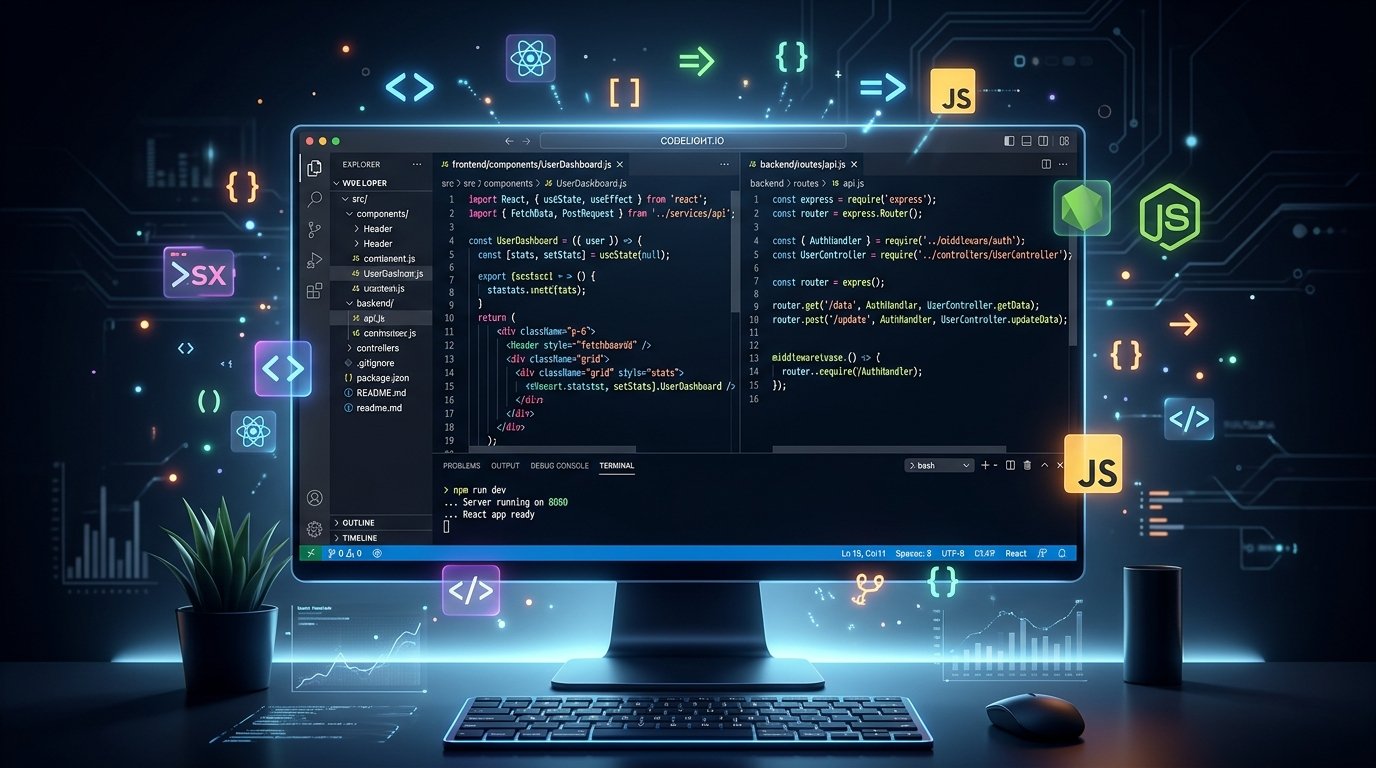
Web development remains one of the most in-demand, versatile, and high-paying tech careers in 2026. Whether your goal is to land a remote software developer job, launch a freelancing business, or build custom web applications for startups, learning how to start web development for beginners provides an indispensable technical foundation.
However, with dozens of programming languages, modern JavaScript frameworks, and developer tools available, beginners often suffer from information overload. In this comprehensive, step-by-step 2026 roadmap, we break down the exact learning path, fundamental tools, core technology stacks, practical project ideas, and career strategies you need to transition from total novice to job-ready developer.
For additional programming career roadmaps, explore our companion tutorial on the Full-Stack Web Development Roadmap.
Why Learn Web Development in 2026?
As businesses across the globe continue digitalizing their core operations, web applications have become central to customer acquisition, SaaS delivery, e-commerce, and enterprise automation. Pursuing a career in web development offers several unique advantages:
- Unrivaled Remote Career Flexibility: Web development is inherently location-independent. Developers can work remotely for international tech hubs from anywhere in the world.
- High Earning Potential & Freelance Autonomy: Skilled web developers command lucrative salaries and premium project rates on freelance platforms like Upwork and Fiverr.
- Rapid Skill Application: Unlike hardware engineering, web development allows you to write code, preview changes instantly in a browser, and deploy live applications within minutes.
- AI-Augmented Productivity: Modern developers leverage AI tools like GitHub Copilot and ChatGPT to write boilerplate code faster, allowing beginners to focus on problem-solving and application architecture.
Understanding the 3 Core Pillars of Web Development
Before writing your first line of code, it is essential to understand how the web works and how software responsibilities are divided across three core domains:
1. Front-End Web Development (Client-Side)
Front-end development involves everything users see, click, and interact with inside their web browsers. Front-end developers craft responsive visual layouts, navigation menus, interactive forms, and smooth animations using HTML, CSS, and JavaScript frameworks like React or Vue.
2. Back-End Web Development (Server-Side)
Back-end development powers the hidden logic behind web applications. Back-end developers build server-side REST APIs, manage authentication, implement business rules, and communicate with databases using server languages such as Python, Node.js, PHP, or Java.
3. Full-Stack Web Development
Full-stack developers master both client-side front-end user interfaces and server-side back-end database systems, enabling them to build complete end-to-end web applications independently.
The Step-by-Step Web Development Learning Roadmap
Step 1: Master the Foundational Web Trio (HTML5, CSS3, JavaScript)
Every web developer must start by mastering the fundamental building blocks of the web:
- HTML5 (HyperText Markup Language): Defines the structural skeleton of web pages (headings, paragraphs, images, forms, and semantic layout tags).
- CSS3 (Cascading Style Sheets): Controls colors, typography, layout spacing, Flexbox, CSS Grid positioning, and responsive media queries for mobile devices.
- JavaScript (ES6+): Adds interactive logic, dynamic data updates, DOM manipulation, asynchronous API fetching (`fetch`/`async-await`), and event handling.
Step 2: Learn Version Control & GitHub Basics
Version control is essential for tracking code changes, collaborating with engineering teams, and maintaining backups. Learn core Git commands (`git clone`, `git add`, `git commit`, `git push`) and create a professional GitHub profile to showcase your code repositories to potential employers.
Step 3: Choose a Front-End Framework (React JS)
Once you understand Vanilla JavaScript, upgrade to a modern component-based UI framework. React JS is the global industry standard for building fast, single-page web applications. Master React components, props, state management (`useState`, `useEffect`), and router navigation. Read our detailed React JS Tutorial for Beginners to get started.
Step 4: Select a Back-End Language & Database (Node.js or Python)
To process user data, build APIs, and handle authentication, choose a back-end runtime:
- Node.js & Express: Allows you to use JavaScript on both front-end and back-end (MERN Stack: MongoDB, Express, React, Node).
- Python (Django or FastAPI): Excellent for clean syntax, rapid application development, and AI integration. Check out our Python Programming Roadmap.
- Databases: Learn relational SQL databases (PostgreSQL, MySQL) or NoSQL databases (MongoDB) to query and store user records safely.
Step 5: Build Real-World Portfolio Projects
Employers hire developers based on proof of work rather than certificates. Build 3 to 4 original full-stack portfolio applications such as an E-Commerce store, a Task Management dashboard, or a Real-Time Chat App. Deploy your projects live using modern hosting services like Vercel, Netlify, or Render.
Web Development Learning Milestone Table
| Learning Phase | Key Technologies | Estimated Timeline | Key Portfolio Milestone |
|---|---|---|---|
| Phase 1: Fundamentals | HTML5, CSS3, Flexbox, Responsive Design | Weeks 1 – 4 | Responsive Landing Page Website |
| Phase 2: Programming | JavaScript ES6+, DOM, Fetch API, Git/GitHub | Weeks 5 – 10 | Interactive Weather or Quiz App |
| Phase 3: Front-End UI | React JS, Tailwind CSS, State Management | Weeks 11 – 16 | React E-Commerce Front-End Store |
| Phase 4: Full-Stack | Node.js / Python, REST APIs, Databases, Cloud Deployment | Weeks 17 – 24 | Full-Stack SaaS Web Application |
Related Web Development Master Guides:
Common Mistakes Beginner Web Developers Must Avoid
Accelerate your progress by avoiding these common traps that stall beginner learning:
- Tutorial Hell: Passive video watching without coding along. Always build custom projects immediately after watching tutorials.
- Framework Overload: Trying to learn React, Vue, Angular, Next.js, and Svelte all at once. Master pure JavaScript and one UI library thoroughly before expanding.
- Ignoring Responsive Mobile Design: Over 60% of web traffic comes from mobile devices. Always design mobile-first using responsive media queries.
- Skipping Developer Security Practices: Failing to sanitize user inputs or exposing API keys in public GitHub code repositories.
Frequently Asked Questions (FAQ)
Can I learn web development in 6 months with zero coding experience?
Yes! With dedicated study (15 to 20 hours per week), beginners can comfortably master HTML, CSS, JavaScript, React, and basic back-end skills within 6 months.
Do I need a computer science degree to get a web development job?
No. The tech industry evaluates web developers based on practical skills, GitHub repositories, and portfolio projects rather than formal university degrees.
Which is better for beginners: Front-End or Back-End?
Front-end development is generally easier for beginners because visual feedback is instant in the browser. Starting with front-end basics before moving into full-stack development provides a natural progression.
How do I optimize web applications for Core Web Vitals and speed?
Optimize images to WebP format, compress CSS/JS bundles, implement server caching, and lazy load below-the-fold assets. Read our guide on Core Web Vitals Speed Optimization.
Conclusion
Starting a career in web development requires consistency, hands-on practice, and structured roadmap execution. By mastering HTML, CSS, JavaScript, React, and basic back-end architecture, you establish a resilient foundation for long-term career success in 2026.
Explore more technology roadmaps, coding tutorials, and digital skills guides right here on Net Skill Forever!
Written by Wahid Ullah
Founder & Lead Educational Strategist at Net Skill Forever. Specialized in Digital Skills Training, Tech Career Guidance, Cloud Computing, Cybersecurity, and Modern Web Development with over 8 years of hands-on industry experience.
Pingback: Best AI Tools for Freelancers and Remote Workers in 2026: Double Your Output [Full Guide] - Net Skill Forever